If you're trying to get your period back, one of the most common questions you may have is: How much should I actually be eating?
The honest answer is: that there isn't one magic number that works for everyone. I know, dont get mad at me! Let me explain.
The thing is your body needs enough energy not only to fuel your daily activities, but also to support essential functions such as hormone production, reproduction, bone health, and temperature regulation. When your body consistently doesn't have enough energy available, getting your body to spend some of its daily allowance on giving you a period gets put on the back burner.
This is one reason adequate nourishment is such an important part of Hypothalamic Amenorrhea (HA) recovery.
There isn't a magic number of calories
It can be tempting to search endlessly online for the "perfect" calorie target you need to hit in order to make your period appear. Especially because a lot of women online tend to claim that they know exactly what number of calories works for them so that must mean that will work for you too...not exactly.
"Just eat 2000 calories a day." "No you need 2500, or 3000." "I only needed 1800 to get mine back." There is so much confusing information out there and its not really helpful when you just want someone to tell you a concrete plan, that's for sure.
Your needs depend on factors such as your activity level, metabolism, current energy availability, and more. Someone who has a high energy job for instance, may need substantially more food than someone with a different daily activity level.
But honestly what I would perfer you to shift your focus to, rather than obsessing over hitting an exact calorie number, is to think about whether you're consistently giving your body enough energy.
For some people, this may mean eating more than they currently are. It may also mean reducing exercise or increasing rest so that more of the energy you're consuming is available for essential body functions, like ovualtion.
Consistency matters
Eating enough occasionally some days isn't necessarily the same as consistently nourishing your body.
Your body needs regular access to energy and nutrients. Skipping meals, routinely going long periods without eating, or compensating for meals with extra exercise can make it harder to restore adequate energy availability.
A helpful starting point can be building regular meals and snacks throughout the day rather than trying to "make up" for eating less on another day.
Eat without restriction
When you're so focused on eating "healthy," it can be easy to unintentionally restrict important sources of energy.
Carbohydrates, have been sooo demonized especially in HA, but they provide enough energy for your body and brain. They also help make you feel safe :) While dietary fats play a major important role in overall health and hormone production. So don't skip those either!
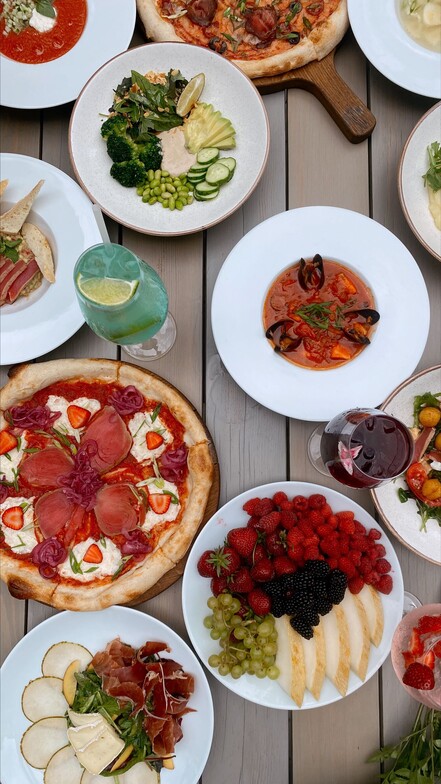
A 'balanced' eating approach can include things like:
-
Carbohydrates such as bread, rice, potatoes, pasta, oats, and fruit
-
Protein such as eggs, dairy, meat, fish, beans, or other protein sources
-
Dietary fats such as nuts, seeds, avocado, oils, cheese, and nut butters
-
Fruits and starchy vegetables
-
Snacks and foods you genuinely enjoy-Yes this includes packaged foods too! It's okay to not eat whole foods 24/7, we all need some convience in our lives especailly in period recovery when you're expected to eat more frequently.
You don't need to eat "perfectly". Adequate and consistent nourishment matters more than having what you define as a perfect diet. Becasue we all have different defitnitions.
And my defienition now includes pizza and icecream nights every month and im never going back.
"But what if I'm afraid of eating more?"
You didnt have to say it, I could already sense the feeling through the screen. This is a very real part of recovery for pretty much all of us.
Increasing your food intake can feel uncomfortable, particularly if you've spent a long time trying to control portions, calories, weight, or your body composition. Throw in the fear of weight and feeling out of control in your body and eating more becomes your eorst nightmare.
If eating more feels terrifying, I get it. Trust me there are many other women who feel the same way, including me when I was in HA back in 2023. Eating more felt like the end of the world- except, when I finally allowed myself to eat more I realized how HUNGRY I actually was..
The fear was there for a while, i cannot lie, hence why I help coach women through these fears. But I can absolutely say that the results, AKA your peirod coming back, makes all the fear feel so miniscule. The day I got my period back I totally had a moment of, why was I ever scared?
Think beyond the number-Don't try to control everything for once
Getting your period back isn't about finding a magical amount of food and following it perfectly every day- because then that too can become a rule and another thing you end up trying to control.
It's more about giving your body enough consistent energy to feel safe enough to support all of its essential functions, which includes increasing your metabolism and getting your period back. Two factors that we work on inside my 1:1 coaching.
Your body needs enough food every day, not just when you're trying to make your period come back.
Let's Remove the Guesswork
We don't get to decide what amount of food we need to resore your period, your body does. Your body sets the bar. As much as we want to try and decide this factor and control it all costs, beacsue I know how much you love control, but we simply cannot.
What we CAN do though, is track your progress using the tracking methods I teach my 1:1 clients so that we can ACTUALLY see whether or not the amount of food you're eating is sufficient enough for you to recover. Or if you're keeping yourself stuck.
We will be able to physcially tell whether or not your body is responging postively to the amount you are eating or whether you still need more.
This way period recovery will stop being a guessing game of numbers. More progress, less stress. Sound good to you?
Book your FREE CALL with me here!
Discalimer: This article is for educational purposes and isn't a substitute for individualized medical or nutritional advice.

Rebecca Pinho
Contact Me